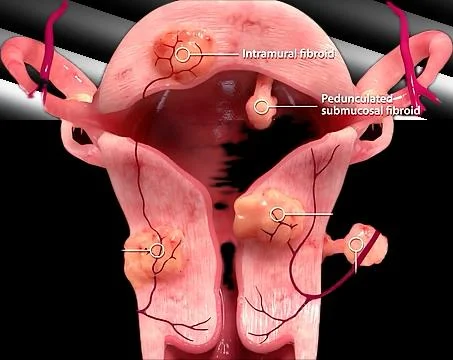
Being told you have a large uterine fibroid can immediately raise questions about treatment. Does a large fibroid automatically require surgery? Is a hysterectomy the only option? Can a minimally invasive treatment still work when a fibroid has grown significantly?
For some women, uterine fibroid embolization for large fibroids may be an option.
Fibroid size is important, but it is only one factor doctors consider when determining the most appropriate treatment. The number and location of fibroids, your symptoms, overall health, imaging results, and personal treatment goals can all play a role.
How Large Can Fibroids Get?
Uterine fibroids are noncancerous growths that develop in or around the uterus. They can range dramatically in size—from very small growths to masses measuring 10 centimeters or more.
As fibroids become larger, some women experience more noticeable symptoms, including:
- Heavy or prolonged menstrual bleeding
- Pelvic pain or pressure
- Abdominal enlargement or bloating
- Frequent urination
- Lower back discomfort
- Pressure on nearby organs
However, size doesn’t always predict how severe symptoms will be. A smaller fibroid in a particular location can sometimes cause significant symptoms, while a larger fibroid may cause relatively few.
Does a Large Fibroid Automatically Mean Surgery?
Not necessarily.
Historically, women with very large or symptomatic fibroids have often been offered surgical treatments such as myomectomy, which removes the fibroids, or hysterectomy, which removes the uterus.
But surgery isn’t the only treatment approach available.
Uterine fibroid embolization (UFE) is a minimally invasive procedure that treats fibroids by targeting their blood supply. Instead of surgically removing the fibroid, UFE causes treated fibroids to shrink over time.
Research has shown that UFE can be performed in appropriately selected patients with large fibroids, including women with dominant fibroids measuring 10 centimeters or more.
How Does UFE Work on Large Fibroids?
During UFE, an interventional radiologist guides a small catheter into the arteries supplying the uterus.
Tiny embolic particles are then delivered through the catheter to reduce blood flow to the fibroids. Without their usual blood supply, the treated fibroids begin to shrink.
Unlike a procedure that surgically removes an individual fibroid, embolization can target the blood supply of multiple fibroids during the same treatment.
As the fibroids shrink, symptoms such as heavy menstrual bleeding, pelvic pressure, pain, and bloating may improve.
Are Fibroids Ever Too Large for UFE?
There isn’t a single size cutoff that determines whether every patient can or cannot undergo UFE.
Research involving women with large fibroids has found that fibroid size alone does not necessarily predict whether embolization will be successful. However, very large fibroids can present additional considerations, and some research has identified higher risks of complications or needing additional treatment among patients with exceptionally large fibroid burdens.
This is why an individualized evaluation is important.
A fibroid specialist may consider:
- The size of the largest fibroid
- The overall size of the uterus
- The number of fibroids
- Where the fibroids are located
- The severity of symptoms
- Previous fibroid treatments
- Imaging findings
- Age and overall health
- Future pregnancy goals
Rather than assuming a fibroid is “too large” for a particular treatment based on size alone, patients can benefit from discussing all appropriate options with specialists experienced in fibroid care.
UFE vs. Surgery for Large Fibroids
UFE and fibroid surgery work differently.
A myomectomy surgically removes individual fibroids while preserving the uterus. A hysterectomy removes the uterus and permanently eliminates the possibility of uterine fibroid recurrence.
UFE takes a different approach. Instead of surgically removing the fibroids or uterus, it reduces blood flow to the fibroids so they can shrink.
UFE is generally performed as an outpatient procedure and may be an option for women seeking a minimally invasive alternative to surgery.
No single treatment is appropriate for everyone. The best choice depends on the individual’s diagnosis, symptoms, goals, and medical circumstances.
Large Fibroids Don’t Mean You Should Stop Asking About Your Options
A diagnosis of large uterine fibroids can feel overwhelming, particularly if surgery is the first treatment discussed.
But fibroid size shouldn’t prevent you from asking questions.
If you’re exploring uterine fibroid embolization for large fibroids, a fibroid specialist or interventional radiologist can review your imaging, symptoms, medical history, and treatment goals to determine whether UFE may be appropriate for you.
Most importantly, don’t assume that having a large fibroid automatically leaves you with only one treatment path.
Understanding your options is the first step toward making an informed decision about your care.

