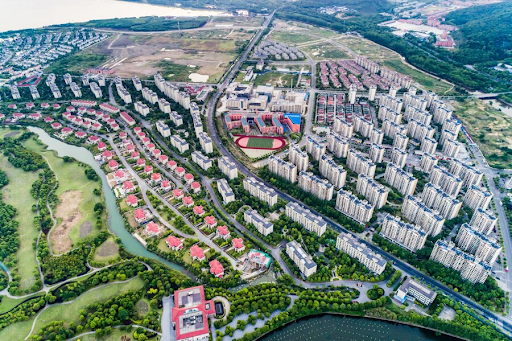
Since cities are growing and developing, town planning has gained much importance in societies. Preparatory planning makes communities to be operational or useful and makes them to be one that will have the capacity to be sustainable in supporting the people. It ranges from the legislation that controls the use of land to the establishment of roads, bridges, parks, and the like.
Urban planning is an extensive field that not only concerns the physical features of a society but also the social and economic ones that include the control and management of growth and development as well as conservation.
1. Understanding the Concept of Town Planning
Town planning involves the orderly arrangement of land and its development for habitation to ensure that the resultant residential environments are habitable. This process is important in enhancing the welfare of the people, property owners, and elements of the surrounding nature.
Furthermore, town planning plays this important role through the proper assignment of spaces for residential, commercial, and recreational zones to enable efficient and proper use of resources. Other attributes include population density, economic development, pollution, and climate change, and these shape integrated planning for cities.
2. The Role of Infrastructure in Town Planning
Infrastructure is one of the fundamentals of town planning. Whenever one thinks of infrastructural facilities that are required for a proper society, the first that come to mind are roads, water supply systems, and Electricity and Telecom Networks.
Development of infrastructures is also very important as it will make goods available to the strategic centers and avoid traffic haziness that may affect the business. Town planners ensure that they incorporate modern technologies and new-age ideas like the use of smart networks and renewable energy sources.
3. Green Spaces and Their Impact on Urban Living
They play a significant role in enhancing the physical and social fabric of towns and, thus, are integral parts of town planning. Parks, gardens, and recreational places are social amenities that provide the community with relaxed and exercise areas.
Apart from social values, green areas also have environmental functions, which include purification of the air, regulation of heat within cities, and conservation of species. The integration of these elements in layouts fosters healthier and aesthetically appealing cities for all citizens.
4. Town Planning and Sustainable Development
Sustainability is the central theme in current town planning. This means that planners work to ensure that the processes of urbanization are as least damaging as possible to the environment. This involves encouraging the use of public transport, supporting efficient lighting and heating of buildings, and even creating pedestrian-friendly environments. Sustainability is one of the major goals of town planning as it not only provides solutions to existing problems but also guarantees the improvement of quality of life for future generations.
5. The Challenges and Future of Town Planning
Although town planning is quite beneficial in many ways, it has its drawbacks as well. Challenges include speedy urbanization, resource constraints, and climatic change. Therefore, town planners are faced with challenges that surround these factors as they work to balance the various stakeholder needs.
As for future trends, the collaborative use of such technologies as artificial intelligence and big data analytics is deemed to change the approach to town planning. These tools will ensure that the designs that are laid down are more accurate and adaptive and will help in encouraging innovative solutions to improve urban development.

