Medically reviewed and authored by Larry M. Wolford, DMD — Board-Certified Oral & Maxillofacial Surgeon, Dallas, TX. Last reviewed: June 2026.
Obstructive sleep apnea (OSA) is far more than loud snoring. When breathing repeatedly stops and starts during sleep, the body is robbed of restful, oxygen-rich sleep — with consequences that reach into daytime function, mood, heart health, and overall quality of life. CPAP therapy is the standard first-line treatment and works extremely well for many people. But for those who cannot tolerate it, or whose anatomy is the root of the problem, corrective jaw surgery offers a treatment that addresses the cause rather than managing it night after night.
Why OSA Happens
During sleep, the muscles that hold the airway open relax. In people with obstructive sleep apnea, the airway behind the tongue and soft palate narrows or collapses, briefly cutting off airflow. The brain rouses the body just enough to reopen the airway, often many times per hour, fragmenting sleep without the person fully waking. For many patients, the underlying issue is anatomical: a lower jaw positioned too far back, a small or recessed upper jaw, or other skeletal features that leave too little room for the airway.
The Limits of CPAP
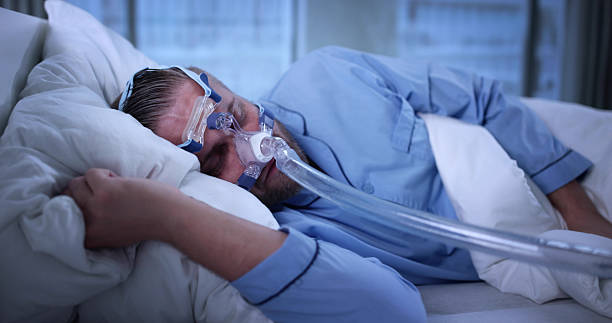
CPAP (continuous positive airway pressure) keeps the airway open by delivering pressurized air through a mask. When used consistently, it is highly effective. The challenge is consistency — a significant number of patients find the mask uncomfortable, struggle with the noise or the tethering to a machine, or simply stop using it over time. CPAP also treats the airway only while it is being worn; it does not change the underlying anatomy. For patients who cannot adhere to CPAP, or who want a more permanent solution to an anatomical problem, surgery becomes a meaningful option.
How Jaw Advancement Surgery Works
The most established surgical approach for moderate to severe OSA caused by skeletal anatomy is maxillomandibular advancement (MMA). In this procedure, both the upper and lower jaws are surgically moved forward. Because the tongue and the soft tissues of the throat are anchored to the jaws, moving the jaws forward pulls these tissues forward as well, enlarging the airway in a stable, structural way. The result is more physical space for air to move — not just while wearing a device, but at all times.
In patients whose airway problem is tied to jaw joint disease — for instance, a lower jaw that has rotated backward due to condylar resorption — addressing the joints (sometimes with total joint replacement) while advancing the jaws can correct the breathing problem, the bite, and the joint disease together.
What Recovery Involves
Jaw advancement surgery is performed under general anesthesia, typically with a hospital stay. The jaws are secured internally with small plates and screws. Patients can expect swelling that peaks early and improves over the following weeks, a soft or liquid diet during initial healing, and temporary numbness of the lips or chin as nerves recover. Most people return to normal activities within several weeks, with full healing over a few months. Many patients are evaluated with a follow-up sleep study to document the improvement in their breathing.
Who Is a Candidate?
Surgery is not the right starting point for everyone, and it is not a substitute for a proper sleep diagnosis. Good candidates are typically patients with moderate to severe OSA driven by skeletal anatomy, those who have not succeeded with CPAP or oral appliances, and those whose imaging shows a jaw position that compromises the airway. The evaluation involves a sleep study, three-dimensional imaging of the airway and facial skeleton, and often coordination with a sleep physician. Treating sleep apnea is also a medical priority, not only a quality-of-life one, given its links to cardiovascular and metabolic health.
Exploring Your Options
If you have sleep apnea and have struggled with CPAP — or suspect your jaw structure is part of the problem — a surgical evaluation can clarify whether jaw advancement could help. To discuss your situation with Dr. Larry M. Wolford in Dallas, Texas, call (214) 828-9115.
Educational disclaimer: This article is for general informational purposes only and is not a substitute for professional medical advice, diagnosis, or treatment. Always consult a qualified healthcare provider regarding your specific condition.

