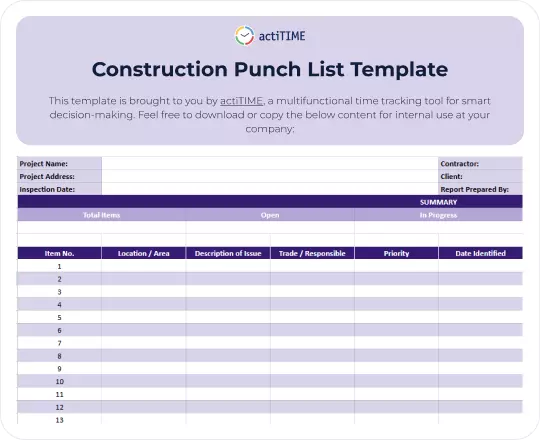
The final weeks of a construction project are often the most administratively intense. The bulk of the physical work is done, but the documentation required to close out the project — punch lists, lien waivers, warranty certificates, as-built drawings, and final inspections — can stretch the timeline by weeks if it isn’t managed proactively. General contractors who treat project closeout as a distinct phase with its own checklists and deadlines consistently close faster and with fewer disputes than those who treat it as an extension of the construction phase.
The punch list is the central document of project closeout. It captures every item that needs to be corrected, completed, or inspected before the project can be formally accepted by the owner. A well-structured construction punch list template organizes these items by location or trade, assigns responsibility for each item, and tracks completion status with sign-off fields. This structure ensures nothing falls through the cracks and gives owners confidence that identified issues are being systematically addressed.
Scope of Work: The Document That Prevents Punch List Disputes
Many punch list disputes trace back to ambiguity in the original scope of work. When the contract doesn’t clearly define the standard of finish for painted surfaces, or doesn’t specify what “complete” means for a particular system, the punch list becomes a negotiation rather than a verification exercise. The owner believes certain items are incomplete; the contractor believes the work meets the contracted standard. Resolving these disputes takes time and damages the relationship.
A detailed construction scope of work template written at the start of the project — specifying materials, finishes, tolerances, and acceptance criteria for each major element — gives both parties a shared reference for evaluating punch list items at closeout. When the scope is clear, punch list reviews take hours rather than days, and disputes are resolved by reference to the document rather than by negotiation.
Tracking Closeout Progress
Effective punch list management requires more than a good template — it requires consistent tracking of item status across potentially dozens of subcontractors working simultaneously on corrections. Project managers who update the punch list daily, communicate status to subcontractors in writing, and escalate overdue items promptly close punch lists faster than those who rely on verbal updates and weekly walkthrough meetings. Using construction invoice templates tied to punch list completion — where final payment is contingent on punch list sign-off — also creates a financial incentive for subcontractors to prioritize closeout work over new project commitments.

